

Are you looking for a screen printing mesh selection Guide? You are on the right page. Actually, screen printing has become a popular method for creating designs on clothing, plastic, metal, and even glass. However, in screen printing, many people focus only on the design, ink, or printing machine. Right?
In all this, the most important part of the entire process, called the screen mesh, is often overlooked. The right screen mesh selection matters a lot as it directly affects your design. Choosing the wrong mesh can ruin your print’s finish and overall look. To help you decide, this guide covers key factors to consider when choosing a mesh for screen printing. So let’s get started.
What is Screen Printing Mesh?
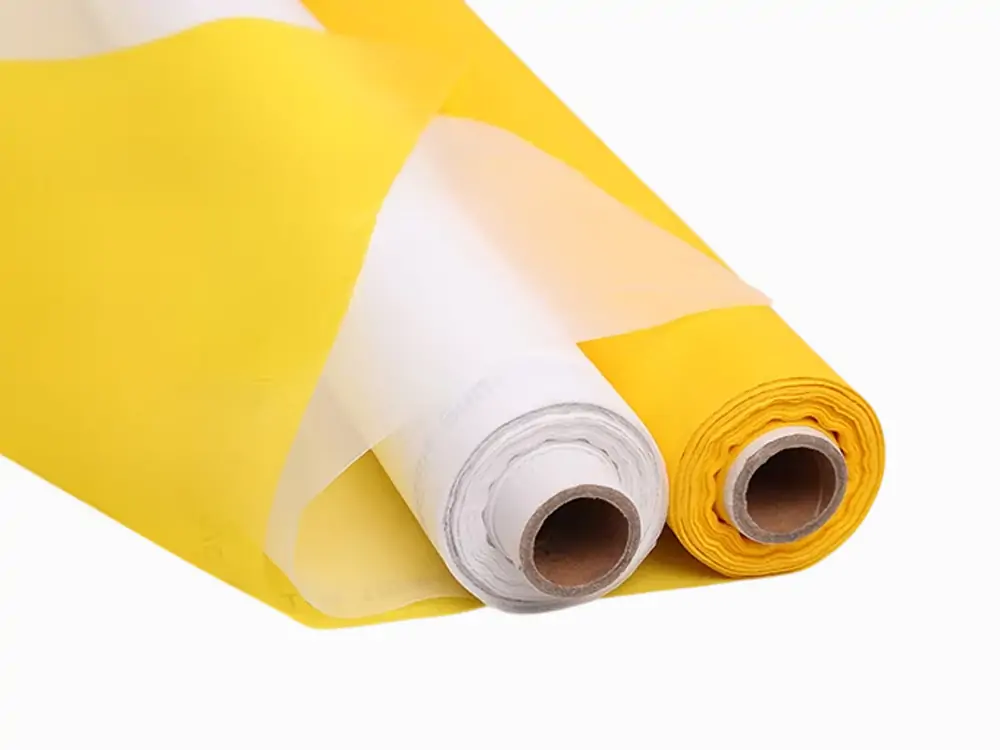
Screen printing mesh is a fine-woven fabric, like a net. This mesh is stretched tightly over a frame to form a complete screen. Basically, it contains tiny holes that allow ink to pass through during printing. This mesh also holds the stencil (design shape) and controls where the ink goes.
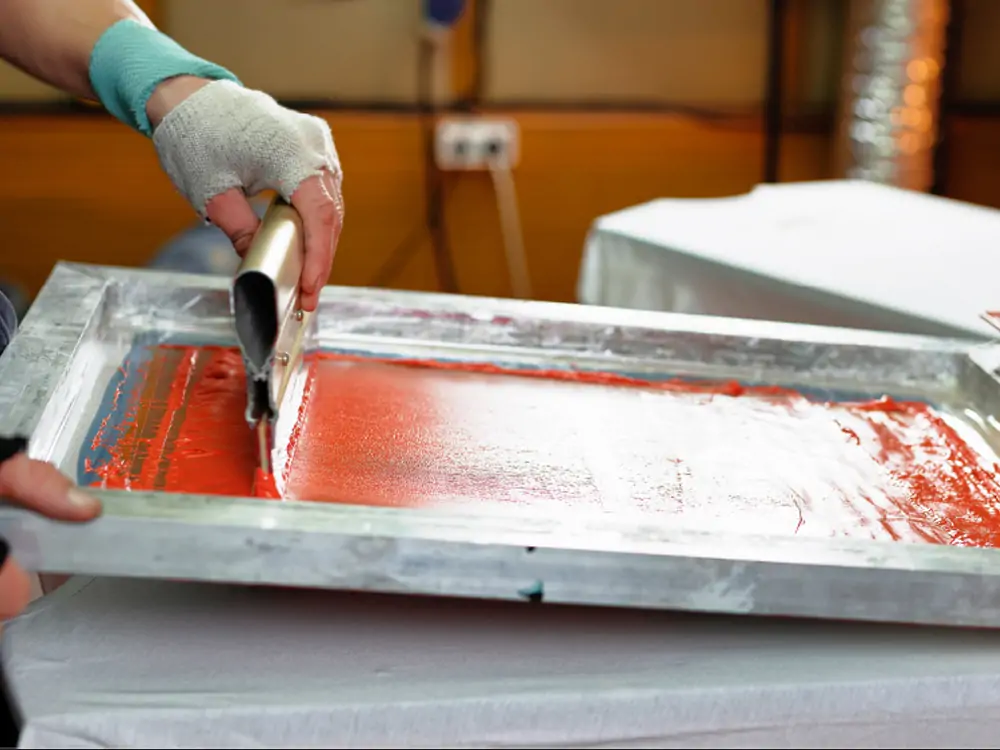
In simple terms, we can say that a mesh in screen printing acts just like a filter. Some parts of the mesh are blocked, while others are open. So, when you push ink across the screen with a squeegee, the ink passes only through the open areas of the mesh. The blocked areas (covered with stencil or emulsion) prevent the ink from passing.
This is exactly how your design is transferred onto fabric, glass, plastic, or other surfaces. However, the size of the holes in a mesh matters. If these holes are large, more ink will pass through the screen, making your design more prominent. However, if the holes in the mesh are small, less ink will pass through, leading to a more detailed design.
How to Choose the Right Screen Mesh for Screen Printing?
In the market, you will find several types of mesh that vary in various aspects. Among those options, you must choose the right mesh that matches your design requirements. Remember, small mistakes in mesh selection can ruin your entire print quality. Before you buy a mesh for screen printing, here are the factors you must consider.
Mesh Count (Threads Per Inch)
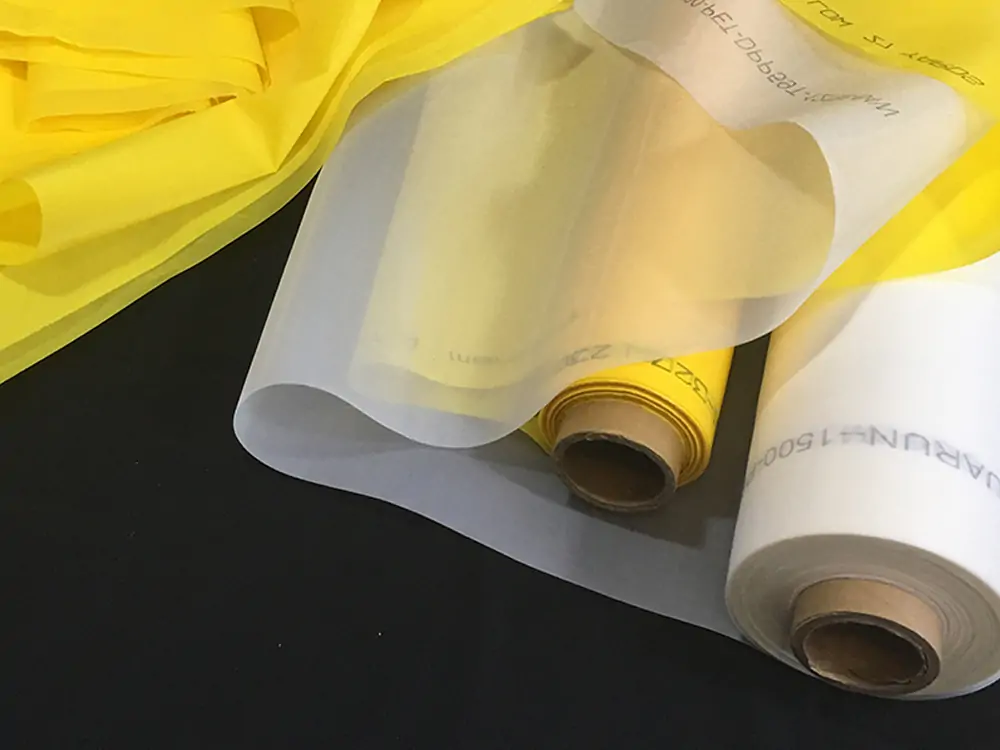
Mesh count is the number of threads per inch of the screen. In simple words, it’s all about how tightly the mesh is woven. Let’s suppose a mesh screen has 110 mesh counts. It means it has 110 threads in one inch. Got it? Now, understand that a higher mesh count means smaller, tightly packed holes.
As a result, less ink will pass through. On the flip side, a mesh with a lower mesh number has bigger holes and allows more ink to pass. When choosing a mesh, the first important factor is the mesh count. It directly affects the hole size in the mesh, which in turn affects the quality of your design.
Hence, if you are working with bold prints, thick ink, or glitter ink, choose a mesh with a lower mesh count, usually 60-110. However, if your goal is to create detailed prints with intricate designs, you should choose a mesh with a higher count, such as 230–305.
Type of Ink Being Used
Secondly, you should also know which type of ink you are using for screen printing. Actually, different inks have different thicknesses. Some inks are thick and heavy, making them difficult to pass through. However, some inks are thin and smooth, passing through the mesh easily. You must choose a mesh that matches the nature of your ink.
For example, if you are using thick, white plastisol ink, you will need a lower mesh count. As I said above, these mesh screens have large holes. Your thick ink will smoothly pass through it. However, if you are using thin ink, such as water-based ink, you should opt for a higher mesh count. High mesh counts have small holes that prevent too much ink from flowing onto the surface. As a result, you will get precise, smooth, and clear prints on the surface.
Ink Deposit Thickness Required
Ink deposit thickness means how much ink you want to sit on the surface after printing. It simply indicates the thickness of the ink layer on the surface of your workpiece. Before choosing the mesh for screen printing, also consider the thickness of the ink layer. For instance, suppose you are working on bold designs that need strong coverage.
In this case, you have to choose a lower mesh count with large holes. This will create thicker layers of ink on the surface. However, if you want to create thick ink layers or detailed designs, you should opt for a higher mesh count. It will help the print look clean and sharp, without excessive ink buildup.
Substrate or Printing Surface Type
The substrate refers to the surface or material you are printing on. This substrate can be any material, like glass, plastic, metal, or fabric. Hence, you also need to consider the substrate’s nature when choosing the mesh for screen printing. For example, if you are using fabric (like cotton t-shirts), remember that it can absorb ink due to its softness.
Hence, for fabric, you can choose a lower mesh count, especially for dark shirts. The lower mesh count allows enough ink to pass through, even if the fabric absorbs it, resulting in a clear, bold design. However, smooth surfaces like glass, plastic, or metal do not absorb ink. As a result, the ink stays on the surface. For such substrates, you should choose a higher mesh count to create even, smooth ink layers.
Mesh Material
Like substrate, mesh also comes in different materials. The most common materials for mesh include polyester, nylon, and stainless steel. All of these mesh materials have different strengths and abilities to hold ink during printing. You should wisely choose the mesh material according to your design requirements.
For example, polyester is the most common mesh material, durable, affordable, and suitable for most printing jobs. It maintains its tension over time, keeping your prints consistent. So no matter whether you are printing fabric, plastic, or glass, it will work well even if you are a beginner. On the flip side, nylon mesh is more flexible than polyester.
It stretches more easily. Therefore, you can use it when printing uneven or curved surfaces, such as glass bottles. Lastly, stainless steel mesh is very strong, precise, and expensive. This type of mesh material is not common for everyday printing. Instead, it is used for industrial printing and technical parts.
Screen Tension & Stability
Tension means how tightly the mesh is stretched over the frame. However, the mesh’s stability ensures consistent prints every time. When selecting the mesh, keep stability and tension factors in mind. Remember, if you buy a mesh with lower tension, it will get loose over time. As a result, the mesh itself will move when you try to push the ink with the squeegee.
This lower tension and the mesh’s movement can cause blurry, uneven prints. Also note that the mesh’s tension depends on its material and the type of frame. For example, polyester mesh is popular because it holds tension well over time. Likewise, stability also matters. Make sure you choose a mesh that maintains its stability and gives you consistent prints over time.
Emulsion Type & Stencil Thickness
Before I discuss how this factor affects mesh selection, you should understand it. Emulsion is actually a light-sensitive coating. It is applied to the mesh to create the stencil (the design). When exposed to light, the emulsion hardens. This leaves open areas where ink can pass through.
So you must carefully choose the emulsion type, as it directly affects how well it adheres to the mesh and how fine your design’s details can be. For example, if you are printing high-detail designs, you should choose dual-cure or diazo emulsions. These are strong and adhere well to a wide range of substrates.
Likewise, stencil thickness also plays a key role. Remember, a thicker stencil blocks more ink. As a result, less ink passes through, which is best for fine detail prints or thin ink deposits. However, if you prefer bold designs or thick inks, you should choose a thinner stencil that allows more ink to pass.
Mesh Selection for Different Applications
Choosing the right mesh depends not only on ink type and design. Instead, it also depends on where and what you are printing on. For better understanding, let’s discuss some applications of screen printing and how you can choose the exact mesh for each.
- T-Shirt & Fabric Printing: Screen printing is most commonly used for fabrics. So if you are printing t-shirts, you should choose a mesh with a low to medium count (110–230). Also, the ink you use for fabric printing must be thick. For the mesh material, choose polyester for stability.
- Printing on Glass: Glass is smooth and non-absorbent, so the ink stays on the surface. For printing glass, usually automatic cylindrical screen printers are used. For this, you should choose a high mesh count (200–305 or higher) for detailing. For glass, the mesh material should be stainless steel.
- Printing on Plastic: Like glass, plastic surfaces are also smooth and non-absorbent. Therefore, the ink used for printing plastic will be thin. For thin ink, choose the higher mesh count (230–305) made of polyester or stainless steel.
- Industrial and Electronics Printing: Screen printing is also used in the electronics industry. These applications require high accuracy and precision. For these parts, choose the mesh with a higher mesh count, like 305–400+. Also, for these parts, you should prefer a stainless steel mesh.
- Printing Special Effects: Sometimes you want your design to stand out. For this, you probably use puff, glitter, metallic, or other special-effect inks. These inks are usually thick and need more space to pass through the mesh. Hence, to create such special effects, choose a mesh with a lower mesh count of 60–110. Also, the mesh material for printing special effects should be polyester.
Domande frequenti
What mesh material is best for beginners?
For beginners, polyester mesh is the best. It is easier to use, strong, durable, and affordable. It maintains stability over time, making it easy to print on uneven surfaces.
Can I use the same mesh for all surfaces?
No! You should not use the same mesh for all surfaces. Fabrics, plastics, glass, and industrial parts need different mesh counts and materials. So you have to choose the right mesh for the best results.
Can mesh color affect my print?
Yes! Mesh color highly affects the print. Usually, yellow mesh reduces light scattering during exposure and is better for fine details. However, white mesh is fine for simple designs.
Conclusione
Screen printing is one of the favorite methods for printing several objects, like t-shirts. It also works well for printing glass and plastic, making it popular on an industrial scale. However, when screen printing, you need a special tool known as a mesh screen. This mesh has tiny holes that allow ink to pass through, creating specific designs. However, the mesh for screen printing is not always the same.
So many get confused when selecting the right mesh for their project. That’s why in this article, I have discussed some factors that can help you make an informed selection. For example, always choose the right mesh count that indicates the number of threads per inch. Also, choose the right mesh material that matches your substrate. When you consider all these factors and go to buy a mesh for screen printing, you will choose the best one.