

Selecting a silk-screen printing machine that meets your production requirements is essential to your success. A pneumatic, a servo motor, or an electric system each comes with its advantages. Knowing these pros and cons will help you choose a machine that meets your budget, quality, and industrial production volume criteria.
The Main Types of Silk Screen Print Machines
The technology of screen printing has undergone significant changes, from manual operations to sophisticated automated systems. Currently, there are three primary options for automatic silk screen printing machine setups.
All types run the squeegee movement through a different power source. This, among other things, affects print quality, operating costs, and more. If you are to decide, it should be based on the product you print and how accurate you need it to be.
Pneumatic Screen Printing Machines
The operation of the squeegee paddle in a pneumatic machine is driven by compressed air. The squeegee is moved to and fro across the screen by air cylinders. Such machines depend on an air compressor for operation.
The pressure of the squeegee is exerted by controlling the air flow into the cylinders. The adjustment of the valves is carried out to control the contact force between the squeegee and the screen.
This method is simple yet a bit difficult to fine-tune.
Servo Motor Screen Printing Machines
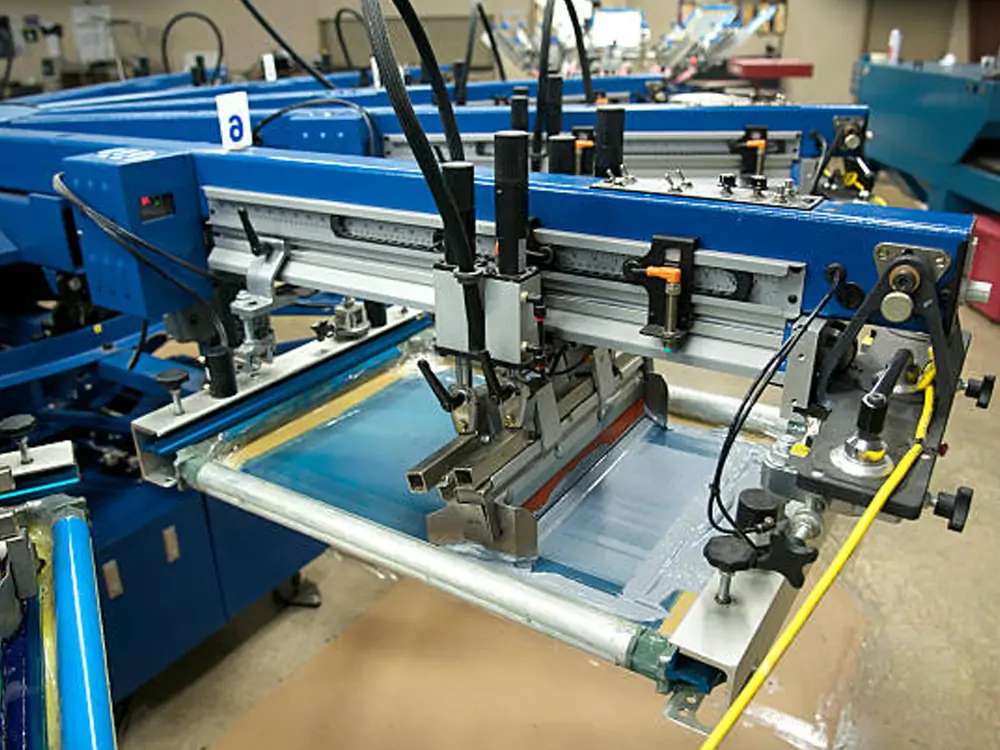
Servo machines are equipped with electric servo motors with digital controllers. The servo motor powers a ball screw and a linear guide system. Thus, you have precise digital control over every movement.
Through a touchscreen, you can program the exact squeegee positions and pressures. For subsequent jobs, the machine will retain these settings. This significantly simplifies the setup process for repeat orders.
Electric Screen Printing Machines
Full-electric machines replace all pneumatic parts with electric motors. A few use standard AC motors, whereas advanced models use servo motors thoroughly. An air compressor is completely unnecessary.
The automatic systems of a silk-screen printing machine are operated solely by electricity. They represent the latest technology in the sector. A lot of them are mixing different types of motors to accomplish a specific task.
How Do Pneumatic Systems Compare With Servo Motor Systems?
Knowing the differences between pneumatic and servo systems allows you to choose wisely. Both have distinct benefits and drawbacks.
The fundamental difference is in their movement control mechanism. Pneumatic systems use air pressure that can fluctuate. On the other hand, servo systems utilize digital signals for precise positioning.
Performance Comparison Table
| Feature | Pneumatic | Servo Motor | Full Electric |
|---|---|---|---|
| Precision | Low | High | Very High |
| Repeatability | ±0.5mm | ±0.05mm | ±0.02mm |
| Speed Control | Variable | Exact | Exact |
| Setup Time | 15-30 min | 5-10 min | 5-10 min |
| Maintenance | High | Low | Very Low |
| Energy Efficiency | 10-25% | 70-80% | 80-90% |
| Noise Level | High | Low | Very Low |
| Initial Cost | Lowest | Medium | Highest |
| Operating Cost | Highest | Medium | Lowest |
Precision and Quality
The print quality with a servo motor system will be significantly better. The positioning accuracy is up to ±0.05mm, whereas pneumatic machines can only achieve ±0.5mm. This is especially important when printing fine details or in multiple colors.
One issue with pneumatic pressure is that it varies with changes in temperature and air supply. So basically, your print might turn out different in the morning and in the afternoon. Servo motors will always maintain the pressure at the exact level, regardless of conditions.
Servo control is a must for printing on transparent materials such as glass or acrylic. The uniform pressure results in no streaks or bubbles. Pneumatic machines struggle with these demanding processes.
Speed and Efficiency
Pneumatic machines can be faster when operations are simple. The air cylinders can give a very quick thrust for basic end-to-end printing. This is actually very fine for single color jobs with forgiving tolerances.
Servo systems make use of controlled acceleration and deceleration. Moreover, you can adjust the speed depending on the ink type and the material.
Fully electric machines can fine-tune all their movements. They don’t spend energy continually compressing air. You can reduce your electricity bills by as much as 50% when switching from a pneumatic to a full-electric system.
Which Screen Printing Machine Works Best for Different Applications?
Different products require different features. You should choose a machine suited to the type of work you are engaged in.
What’s your most common type of job like? To what degree do they require precision? How many colors do you run? What is your production volume?
When Pneumatic Makes Sense
For the very basics of single-color printing, going with pneumatic is the wise choice. Simple graphics still print really well on boxes or signage. Cleaning shops with a budget that can occasionally do work can start here.
Through the pneumatic technique, the environment is very dusty and dirty, which is exactly the conditions where this system will perform better. Dust and dirt have less effect on air cylinders than on electric components. So, these kinds of construction sites or warehouses are, in fact, the place for this type of equipment.
When Servo Motor Excels
Use a servo for professional-quality multicolor work. There is no doubt that precision gives outstanding results for T-shirt printing, decals, and labels. A glass panel printer is a must-have for any servo control.
The garment decoration industry, which produces the same design repeatedly, really appreciates the job memory function. Just a little setup when creating the program, and it can be used for the time to come. Their trainers no longer need to be highly skilled to achieve consistent results from new operators.
Medium- to high-volume plants can expect to have their investment repaid as quickly as possible.
How Do You Choose the Right Screen Printing Machine?
To make an appropriate selection, you need to be honest about what you want. Do not purchase unnecessarily extra machines. Simultaneously, do not put a cap on your growth potential.
Begin by enumerating your needs. Be quite clear about the print size, the required precision, and the production volume.
Decision Checklist
- Ask yourself these questions:
- What is the typical size of the print and its detail level?
- How many colors do you usually print with?
- What materials do you print on mostly?
- What is your production volume on a daily basis?
- Do you have room for an air compressor?
- How important to you is the speed of job changeover?
- What is your maintenance tolerance level?
- Are you planning to increase production?
The answers that you give will lead you to the appropriate technology. Also, be realistic about your budget and keep in mind that this is a long-term investment. A machine that limits your capabilities is more expensive in terms of the opportunities that you miss out on.
Have a conversation with shops that do the same kind of work as you do. What machines do they use? What would they do differently next time? Real-world experience is always better than sales brochures.
Conclusion
You have to choose the best silk-screen printing machine based on your business needs and future growth plans. Pneumatic systems have a low cost of entry but high operating costs. Servo motor machines strike a good balance between performance and price while also significantly reducing energy consumption. Full electric is a top-tier option offering maximum precision and efficiency.
Don’t just compare prices; work out your total ownership costs over five years. Want to take your screen printing quality to a new level and reduce your running costs at the same time? Check out our range of automatic silk-screen printing machines and pick the one that perfectly fits your production requirements .