

In the past, screen printing was all done by hand. However, things have changed since advanced screen printers have made printing much easier. Some printing machines are fully automated, while others are semi-automated, requiring human effort. Their differences spark a debate over semi-automatic vs automatic screen printing machines.
Interestingly, both of these machines are suitable for different printing needs. You’ll see many people prefer automated cars mainly due to their speed. However, semi-automatic machines are also very useful, especially for small businesses. In this article, I will discuss all the key differences between these two screen printing machines.
Differences Between Semi-automatic and Automatic Screen Printing Machines
The basic functionality of both automated and semi-automatic screen printers is the same. They both create prints on different products using mesh screens and stencils. However, they differ in many aspects. Some of the key differences between these machines include:
- Automation Level
- Labor Requirement
- Production Speed
- Print Consistency
- Ease of Operations
- Space Requirement
- Repeated Printing Capabilities
- Initial & Operating Cost
Let’s jump down and explain each difference in detail.
1- Level of Automation
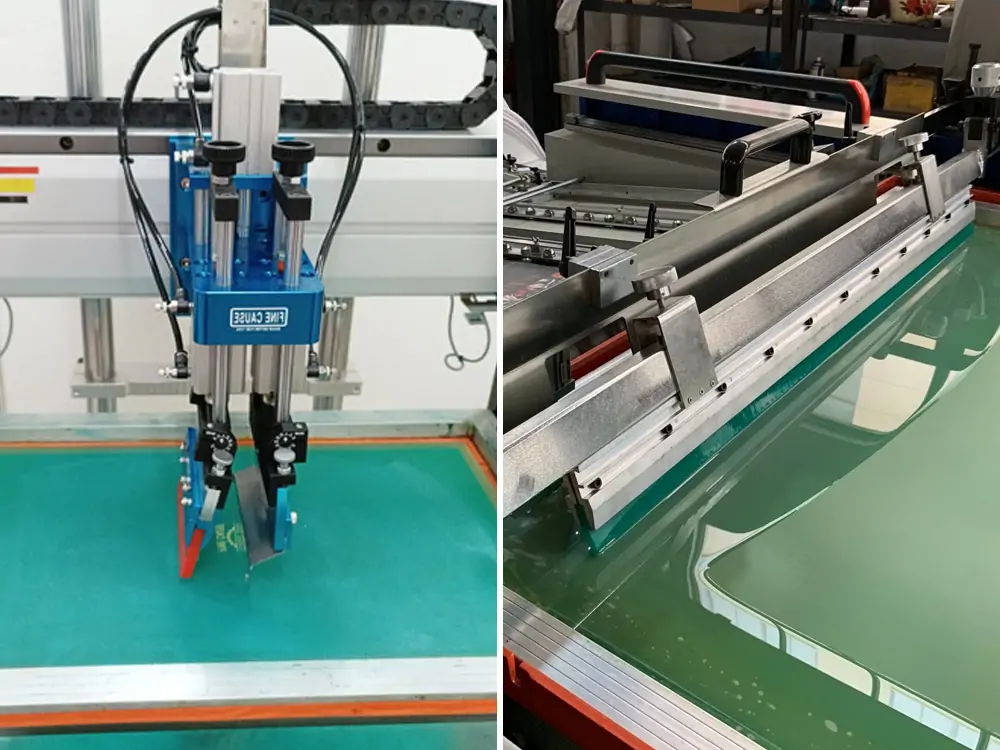
Semi-automatic screen printing machines have a small level of automation. Only the squeegee movement and the ink spreading on the mesh screen are automated. Apart from that, material loading and unloading, and starting each print cycle, are manual. This means you’ll have more control over the printing process. On the other hand, automatic screen-printing machines are fully automated. From the squeegee movement to ink spread and material loading, everything is automated. As a result, these machines require very little human involvement for their operation.
2- Labor & Skill Requirement
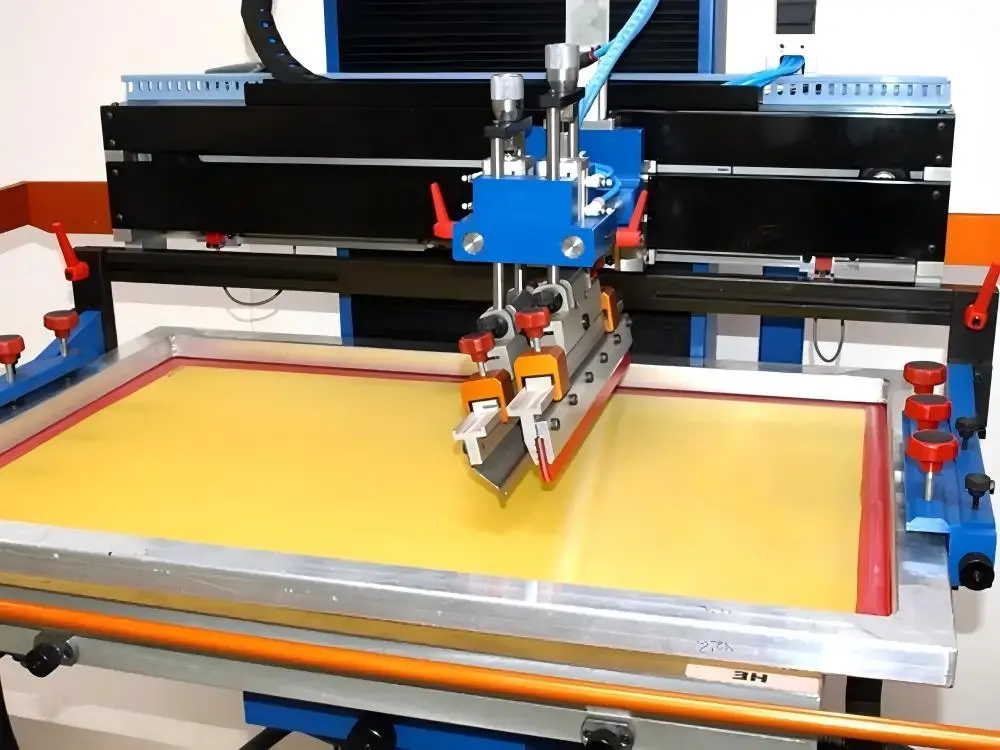
Semi-automatic screen printing machines require labor for their proper operation. Why? That’s because these machines involve many steps requiring human effort. For example, material loading, unloading, and alignment require dedicated labor. Additionally, it is best to have labor with some experience. However, it does not require specialized skills to operate these machines.
On the other hand, automated screen printers require little labor. The reason is that every step in these machines is automated. Only operators with the right skills can properly operate these machines and get printing done. In short, these machines require little labor with the proper skill set. This ensures the labor or operator can set up and program these modern screen printers.
3- Production Speed & Volume
Semi-automatic screen printers are more manual in operation. Most of their steps are done by human labor. This makes these machines work a bit more slowly. When speed is slow, your production volume will be lower. Conversely, automatic screen printers involve automated processes during printing.
All steps, including squeegee movement, ink spread, and loading/unloading of material, are automated. This means these machines offer high printing speed. This will increase your production volume, especially if you need a single design printed across many products. For large businesses, I recommend automated screen printers and vice versa.
4- Print Consistency & Flexibility
I consider automatic screen printers an ideal option when you need print consistency. This is because these machines can use a single design to print on hundreds of products. The printing style, design, and intricacy will be uniform across all the products. That’s why automated printers are ideal for repeated printing tasks.
On the flip side, semi-automatic printers are not ideal for print consistency. More human involvement can result in slight changes in printing. However, these printers allow you to adjust the design midway through printing. You get more control over the printing process, allowing you to make changes.
5- Ease of Operations & Maintenance
Semi-automatic screen printing machines are easy to operate. The reason is that most of their parts are manual. An operator with some experience can easily operate these machines. Since these machines have fewer and simpler components, their maintenance is also easier. If they get damaged, any mechanic can easily fix them due to their simple design.
On the other hand, automatic screen printers are very complex. First, their operation is challenging and requires operators with proper skills. From setup to programming and advanced controls, newbies may find them difficult to operate. Additionally, maintaining these machines is difficult due to their complex parts.
6- Space Requirement & Setup Complexity
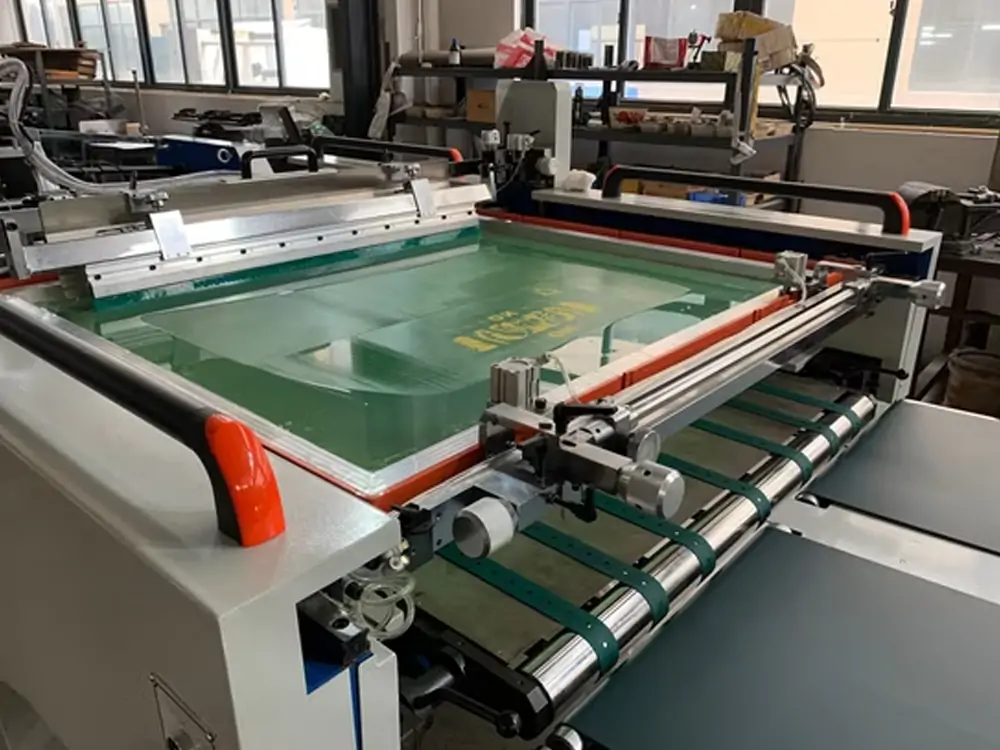
Automated screen printers come with a complex setup. In fact, during operation, operators must program them to ensure they function properly. Additionally, these screen printers are generally on the larger side. This means they occupy more space, which is a drawback if you have tight spaces.
On the contrary, semi-automatic screen printers are generally compact. You can keep them even in tight spaces and use them easily. Additionally, their setup is not very complex and requires no specialized skill set. You can set them up in your workshop with ease. If you’re a newbie and just starting, I recommend choosing semi-automated screen printers.
7- Repeated Printing Capabilities
I rank automatic screen printers at the top for repeat printing. As said above, these printers do not require manual loading and unloading of materials. Instead, they work in automation, squeegeeing, spreading ink, printing, and loading new products. This way, they can create a single design for hundreds of products with exceptional precision.
Print consistency will be uniform across all products (clothing). On the other hand, semi-automatic screen printers lag in this aspect. They require manual loading, unloading, and product alignment. So, each time you’ll have to load and adjust the products. This adjustment can affect the prints, and they do not look identical on the products.
8- Initial & Operating Cost
The initial cost of automated screen printers is very high. That’s mainly because of the advanced automated level these machines come with. You get better performance, high speed, consistent prints, but at a high price. Additionally, their ongoing costs are high due to the complex setup. The prices of their parts are also high, as is the cost of regular maintenance. You’ll have to hire a professional operator for these machine operations.
Semi-automated printers are inexpensive, with initial costs much lower than their counterparts. Additionally, they don’t have high ongoing costs, which is a significant advantage. Their parts are easily available at affordable prices. When it comes to their operation, you can handle them if you have some experience. So, I recommend semi-automated printers if you have a tight budget.
Final Words
So, which of the two printers should you choose? Honestly, the selection between these two screen printers is very difficult. Both options are excellent; however, they suit different types of printing businesses. I recommend choosing semi-automatic screen printers for small to medium businesses. You’ll get these printers at a low price and complete small projects on time.
Their low maintenance and ease of operation make them suitable for new businesses with limited experience. However, if you run a large business, automatic screen printers are the best option. Using these, you’ll be able to meet the deadlines and get high production volume. Remember, these printers are expensive, but they also offer better performance, which makes their cost worth it.