The days are gone when brands had to apply a separate film on bottles for logos and designs. Modern printing machines use ink and high-quality designs and print directly on the bottle surface. These machines are very precise, resulting in high-quality prints on the bottles. Interestingly, various bottle machines are available for creating designs on bottles. Understanding the basics of these machines is crucial. Additionally, various factors affect printing quality. In this article, I will discuss bottle printing machines and factors that affect them.
What Is a Bottle Printing Machine?
Before discussing the factors, I will cover the basics of bottle printing machines.
Bottle printing machines use advanced equipment to apply prints and designs to bottle surfaces. These machines do not involve applying any adhesive labels on bottles. Instead, they use ink to create designs or prints directly on the surface, making them last longer. These designs can include logos, text, slogans, and prints.
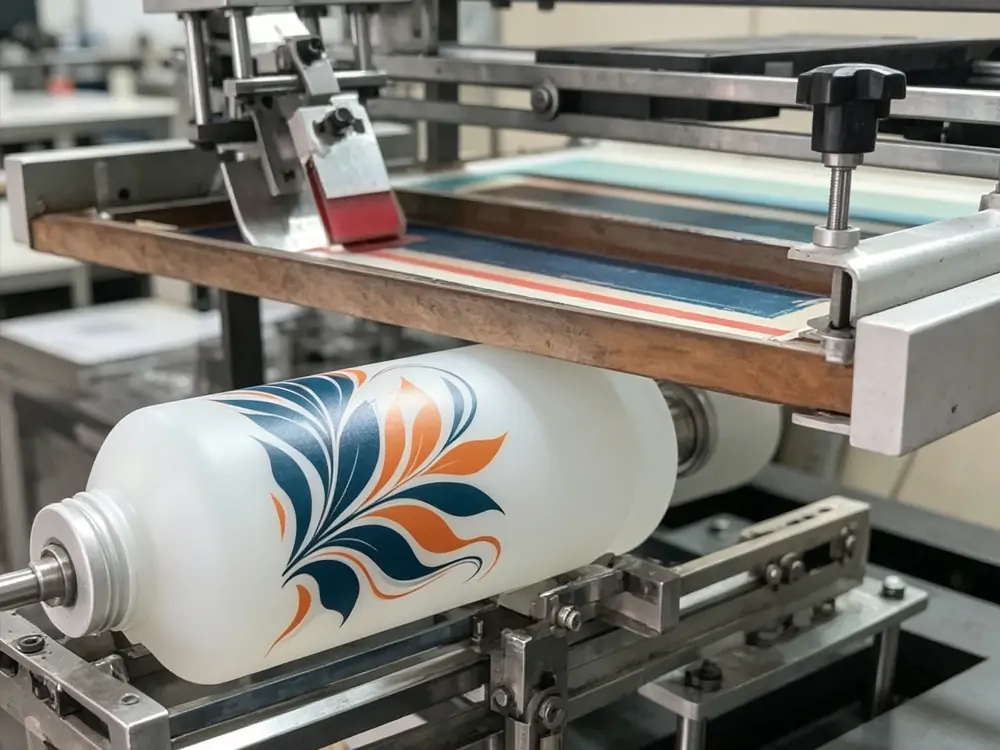
There are different types of bottle printing used in modern packaging. Some of these include screen printing and UV inkjet printing. Pad printing, and the list goes on. However, all of these use dedicated inks to create prints and designs. Bottle printing machines can create designs on bottles of all shapes.
Even if the bottle is curved or has different dimensions, this method still works for creating designs on it. Let’s understand how these machines work. First, the operator cleans the bottle that holds the prints and clamps it into the fixture. Positioning of the bottle is crucial. If the bottle moves or vibrates, the ink may end up going in the wrong place, affecting the alignment of the prints.
After that, the printing machines start working. Screen printing machines push the ink through a mesh screen using a squeegee. In contrast, UV inkjet machines have printheads that eject ink onto the surface and create prints. Lastly, pad printing machines use silicone pads to transfer ink onto the bottle’s surface, creating prints.
Remember, each bottle printing machine differs in how it applies ink to the surface to create a design. Once the machine applies the ink, it cures, solidifying the design and making it permanent on the bottle’s surface. It is worth noting that these machines can print and design on a wide range of materials. These include glass, PET, HDPE, PP, and the list goes on.
6 Factors That Affect Printing Quality on Bottles
Although bottle printing machines are very precise and efficient in their work. However, the quality of prints on the bottles depends on different factors. In the section below, I will discuss various factors that affect printing quality on bottles.
1- Bottle Material
As I said above, bottle printing machines can create high-quality prints on a wide range of materials. These include glass, plastics (PP), and so on. The material you print on affects the quality. For example, printing on glass bottles is easier and ensures high-quality prints. This material offers excellent adhesion for the ink. In contrast, prints on plastic bottles may not be of the highest quality. The reason is that ink adhesion is a bit weaker on plastic bottles. Remember, prints made by the same machines may differ when done with two different materials.
2- Surface Condition of the Bottle
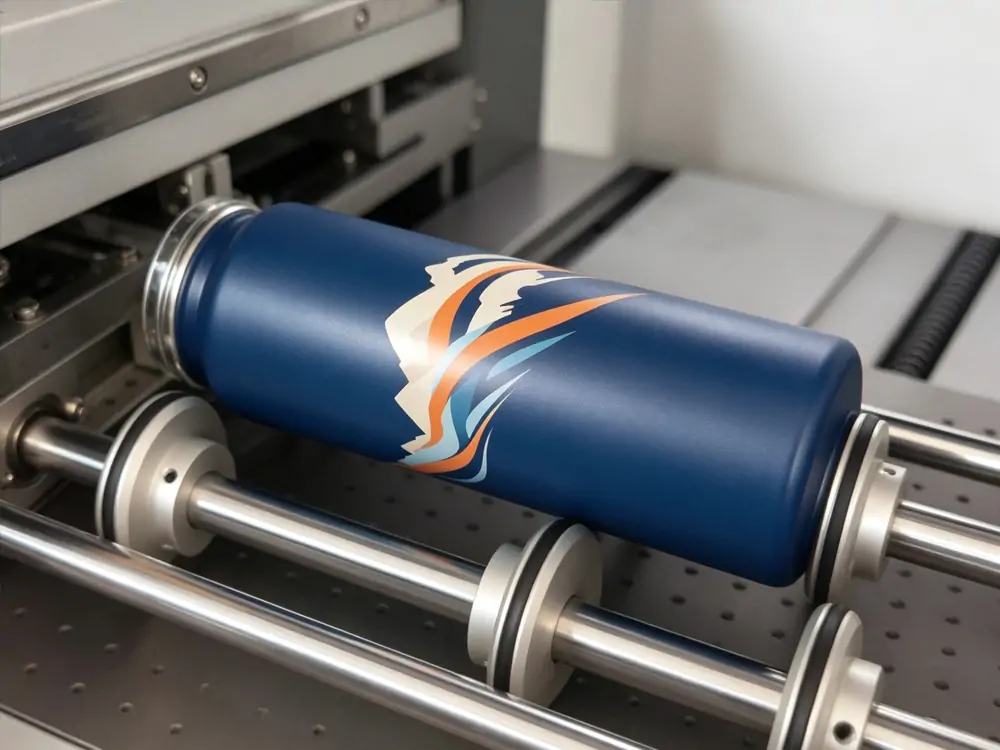
The condition of the bottle’s material is another important factor. If the bottle is unclean, the prints on it may not be of the highest quality. The ink spread would be uneven on the surface of the bottles. Additionally, issues such as smudging and peeling of the prints are also common. Before printing, I highly recommend cleaning the bottles first. Remove dust, oil, grease, and any other contaminants from the surfaces of the bottles. Additionally, if bottles have rough patches or scratches, print quality would be affected due to them as well.
3- Ink Type and Compatibility
As you know, there are different types of ink available for bottle printing. The ink you choose must be compatible with the material of your bottles. If not compatible, print quality would be affected. Remember, incompatible ink will result in faded colors, poor adhesion of the print on bottles, and durability issues. Remember, ink for glass bottles may not be the best for printing on plastic bottles. You should always choose the right ink for your specific bottle materials. Above all, the ink is also compatible with the printing machine.
4- Bottle Positioning and Rotation
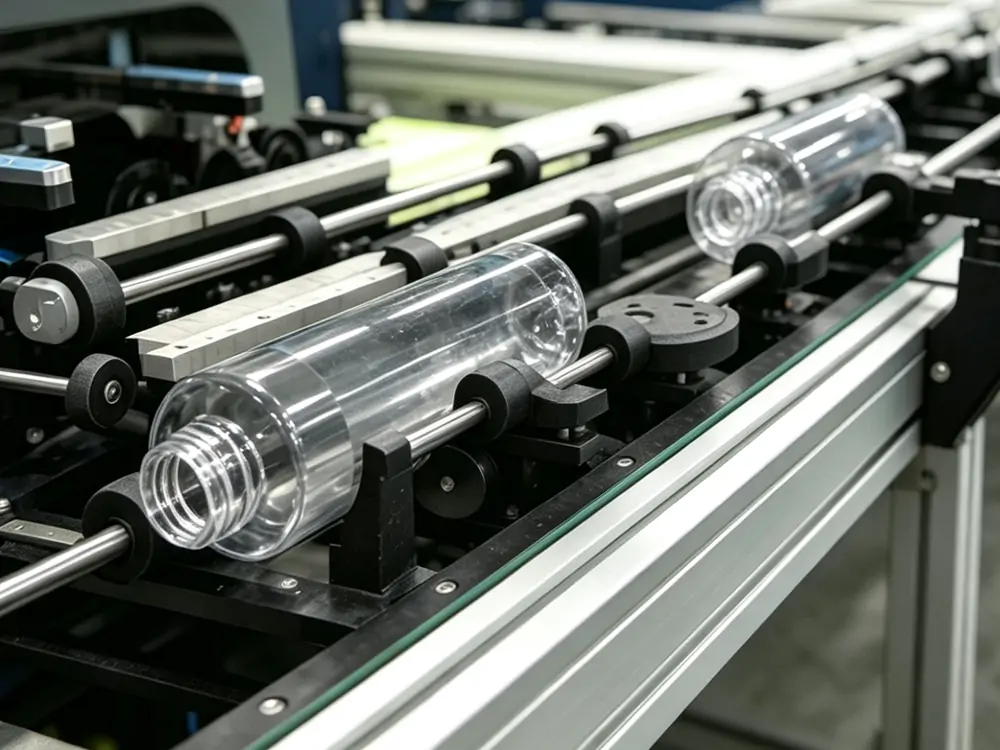
Bottles where printing is being done must not shift, wobble, or rotate unevenly during printing. If this happens, the design might be misaligned, stretched, or blurry. Remember to keep the bottle clamped in the fixture. This way, the bottle won’t experience the vibration of uneven movement. During rotation, the speed should not be too high. This is very important, especially when printing on curved surfaces. During rotation, make sure the ink applies to the correct surface and produces high-quality prints.
5- Print Resolution and Artwork Quality
The artwork (design) resolution is another important factor affecting print quality. If the artwork’s print resolution is lower, it negatively affects print quality. The prints on the bottle may look faded or less vibrant due to lower print resolution. Remember, print resolution is typically measured in Dots per Inch (DPI). Print resolution should be higher if you want fine details printed on the bottles. Although print resolution is an important consideration, it is not the sole factor in improving print quality.
6- Ink Curing and Drying
As discussed above, ink is used for print design on the bottles. This ink must undergo curing and dry completely. During curing, the ink forms a strong bond with the bottle. This way, the ink permanently adheres to the bottle’s surface. If not dried, the print may smear easily.
Additionally, the risk of fading, scratching, and peeling in uncured prints is high. Therefore, you should leave the ink to dry for enough time. In UV printing, ultraviolet light quickly cures the ink. In other printing methods, air or sunlight is used to cure and dry the ink on the bottle.
Conclusion
Let’s conclude – bottle printing machines are highly efficient. They help create high-quality prints and designs on the bottles’ surfaces. You can add patterns, logos, slogans, or text on the surface of the bottle using these machines. However, various factors influence print quality. If you print on bottles without considering them, you’ll end up with low-quality prints. In this article, I have discussed six crucial factors that ensure high-quality prints on bottles.